


Learning how to control sugar level starts with consistent everyday habits rather than one quick fix. Choosing high-fibre foods, staying active, managing portions, sleeping well and monitoring glucose can support better blood sugar management. A thoughtful routine can make these habits easier to maintain, and the right approach can begin with a few simple changes today.
What Does It Mean to Control Your Sugar Level?
Blood sugar, or blood glucose, is the main source of energy used by your body. Insulin helps move glucose from the bloodstream into cells. When this process does not work effectively, blood glucose can remain elevated.
Good blood sugar management means keeping glucose within the range recommended for your individual health needs. The goal is not to chase a single reading but to develop habits that support steadier glucose levels over time.
Several factors can influence blood sugar, including:
- The type and amount of carbohydrates you eat
- Physical activity
- Sleep quality
- Stress
- Body weight and metabolic health
- Medicines and supplements
- Illness or infection
- Meal timing and portion sizes
For people living with diabetes, lifestyle measures work alongside, not instead of, medical treatment.
How to Control Sugar Level Naturally
If you are wondering how to control sugar level through everyday habits, start with the basics. Small, repeatable changes often matter more than extreme diets or short-term restrictions.
1. Build Balanced, High-Fibre Meals
Fibre slows digestion and can help reduce rapid rises in blood glucose after meals. Include vegetables, beans, lentils, whole grains, nuts and seeds regularly.
A balanced plate can include:
- Half non-starchy vegetables
- One-quarter protein
- One-quarter carbohydrate-rich foods
- A small portion of healthy fat
Whole fruit can also fit into a balanced eating pattern. Focus on portion size and overall meal composition rather than completely avoiding carbohydrates.
2. Be Mindful of Carbohydrate Portions
Carbohydrates have a direct effect on blood glucose. Large portions of refined carbohydrates, sweets, and highly processed foods can make blood sugar management more difficult.
Choose nutrient-rich carbohydrate sources more often and pair them with protein, fibre or healthy fats. This approach makes meals more satisfying while supporting a steadier glucose response.
For broader guidance on building a balanced nutrition routine, you can also explore Ayuvya's wellness and health-care range.
3. Choose Water Over Sugary Drinks
Soft drinks, sweetened juices, energy drinks and other sugary beverages can add a significant amount of rapidly absorbed sugar to your diet.
Water is a simple everyday choice for hydration. Unsweetened beverages can also help reduce unnecessary added sugar intake.
4. Stay Physically Active
Regular movement helps your muscles use glucose for energy and supports overall metabolic health. You do not need an intense workout every day to become more active.
Useful options include:
- Brisk walking
- Cycling
- Swimming
- Strength exercises
- Stretching and mobility work
- Short walks after meals
If you are currently inactive, begin gradually and choose activities that you can maintain consistently.
5. Maintain a Healthy Weight
For people who are overweight, gradual weight management can support insulin sensitivity and improve overall metabolic health. However, healthy blood sugar management is not defined by a particular body size.
Focus on sustainable habits rather than crash diets. Balanced meals, regular movement, adequate sleep, and realistic portions are more useful for long-term progress. If you are interested in broader nutrition and healthy weight-management habits, you can also read how to gain weight through balanced nutrition.
For people interested in a broader approach to maintaining a healthy weight, Ayuvya's weight-management resources can provide additional wellness information.
6. Prioritise Quality Sleep
Sleep is often overlooked when people think about blood sugar. Poor or irregular sleep can affect appetite, energy, stress, and metabolic health.
Aim for a consistent sleep routine and create habits that make restful sleep easier. Limiting late-night heavy meals, maintaining a regular bedtime and reducing unnecessary screen exposure before sleep can help.
7. Manage Everyday Stress
Stress can affect hormones and daily behaviours that influence blood glucose. Long periods of stress may also make it harder to maintain healthy eating, sleep and exercise routines.
Simple strategies can include:
- Deep breathing
- Meditation
- Walking outdoors
- Gentle exercise
- Relaxation techniques
- Maintaining a consistent daily routine
The aim is not to eliminate every stressful situation but to develop healthier ways of responding to it.
8. Monitor Your Blood Sugar as Recommended
Monitoring can help you understand how your body responds to meals, activity and treatment. Keep a record of readings when your healthcare professional recommends monitoring and look for patterns rather than becoming overly focused on individual numbers.
Your appropriate blood sugar target depends on factors such as your health, diabetes type, medicines, age and treatment plan. Follow the targets provided by your healthcare professional rather than using a universal number.
Which Foods Help Control Blood Sugar?
There is no single food that automatically controls blood sugar. A consistent dietary pattern matters more.
Foods to Include More Often
Consider making these regular parts of balanced meals:
- Non-starchy vegetables
- Beans and lentils
- Whole grains
- Nuts and seeds
- Lean protein
- Whole fruits in suitable portions
- Unsweetened dairy or suitable alternatives
Foods to Limit
Reduce frequent consumption of:
- Sugary beverages
- Sweets and desserts
- Refined grains
- Highly processed snacks
- Large portions of carbohydrate-rich foods
The focus should be on improving your overall eating pattern, not creating a list of foods that you can never eat.
How to Control Sugar After Eating
Post-meal blood sugar naturally rises because digestion releases glucose from food. The size of this rise can depend on the meal, portion size, activity level and individual metabolic response.
If you want to improve post-meal blood sugar management:
- Keep portions reasonable
- Include vegetables and fibre
- Add a source of protein
- Limit sugary beverages
- Avoid very large carbohydrate-heavy meals
- Consider light movement after eating when appropriate
A short walk after a meal can be an easy way to add movement to your routine, although the effect varies from person to person.
Can Ayurveda Support a Blood Sugar Management Routine?
Ayurveda can be incorporated as a complementary wellness approach, but it should not replace diabetes medication, glucose monitoring, or professional medical care.
Ayurvedic ingredients such as fenugreek, bitter melon, amla, gymnema, turmeric and jamun are being studied for their potential metabolic effects. The evidence differs by ingredient, preparation, and study design, so individual ingredients should not automatically be treated as proven diabetes treatments.
For people exploring how to control sugar as part of a broader wellness routine, consistency remains more important than relying on any single supplement.
Ayuvya Options for Everyday Blood Sugar Support
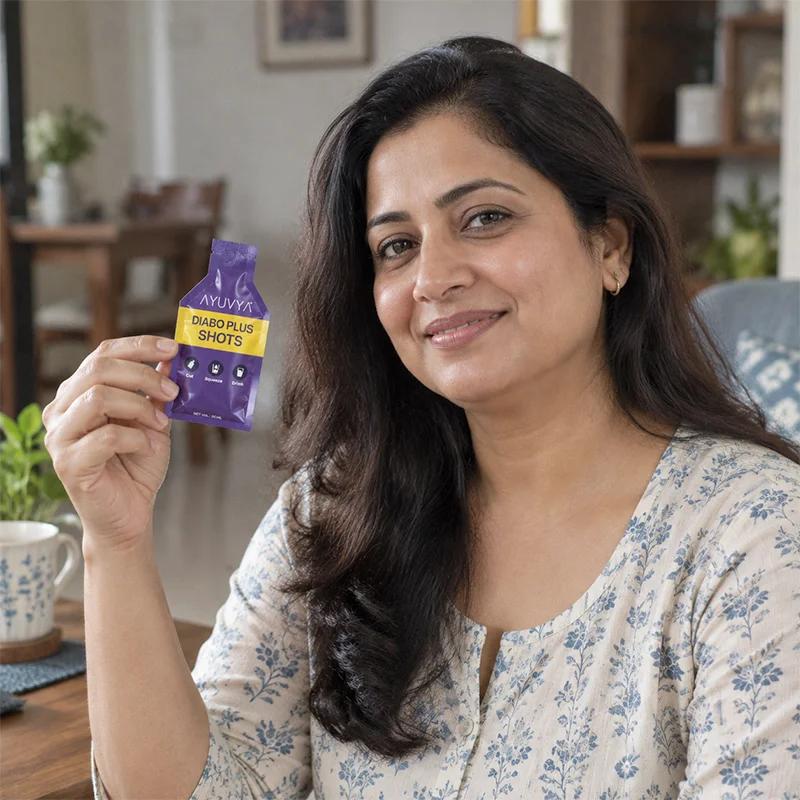
Ayuvya offers products specifically listed under its diabetes and chronic-care range, including Ayuvya Diabo Plus Shots and Ayuvya Diabo Plus Tablet. The product range combines Ayurvedic ingredients intended to support healthy blood sugar management.
Ayuvya Diabo Plus Shots contains ingredients including fenugreek, bitter melon, amla, gymnema, curcumin, neem, giloy, and jamun. Ayuvya states that its product information is based on research on the individual ingredients and explicitly does not claim that the product treats, cures, or prevents diabetes.
Ayuvya Diabo Plus Tablet is another option in the same category for people looking to include Ayurvedic support within their daily wellness routine. Any supplement should be considered alongside, not as a replacement for, professional diabetes care.
If you take diabetes medication, speak with your healthcare professional before adding a supplement or changing your treatment routine.
How Long Does It Take to Control Blood Sugar?
There is no universal timeline. Blood glucose can change over hours in response to food, activity, stress, and medication, while longer-term measures such as HbA1c reflect glucose patterns over a much longer period.
That is why how to control sugar level is better approached as a long-term routine than as a quick-result challenge. Consistent habits and appropriate medical care provide a more reliable foundation than drastic short-term measures.
When Should You Seek Medical Help for High Blood Sugar?
Contact your healthcare professional if your blood sugar remains higher than your recommended range or you notice repeated unexplained changes.
Seek urgent medical attention when very high blood sugar occurs with serious symptoms such as:
- Vomiting
- Confusion
- Severe weakness
- Difficulty breathing
- Severe dehydration
- Symptoms suggesting a diabetic emergency
Do not attempt to manage severe symptoms solely with food, exercise or supplements.
A Simple Daily Routine for Better Blood Sugar Management
A practical routine can make how to control sugar level much easier to follow.
Morning
- Eat a balanced breakfast.
- Take prescribed medicines as directed.
- Drink enough water.
- Add movement to your morning.
Afternoon
- Choose a balanced lunch.
- Keep carbohydrate portions sensible.
- Take a short movement break.
Evening
- Choose a nutrient-dense dinner.
- Avoid excessive sugary foods and drinks.
- Add light activity when appropriate.
Night
- Follow your recommended glucose-monitoring routine.
- Keep your bedtime consistent.
- Prioritise adequate sleep.
Take the Next Step With Ayuvya
Knowing how to control sugar is only useful when healthy habits become part of everyday life. Build your routine around balanced nutrition, regular movement, adequate sleep, stress management, and appropriate monitoring.
For those looking to add Ayurvedic wellness support to that routine, explore Ayuvya's health-care products and consider options such as Ayuvya Diabo Plus Shots and Ayuvya Diabo Plus Tablet. Use supplements responsibly, follow recommended directions, and consult your healthcare professional if you have diabetes, take medication, or have other health concerns.
Better blood sugar management starts with consistency, not quick fixes.